From 10 to 14 June, the Midnight Sun Film Festival presents a prismatic glimpse of cinema history. The programme includes works by celebrated masters from the 1950s, European musicals from the 1960s, and a selection of animation, experimental film, and early cinema. Both a Professor Emeritus and a drag artist will present their own favourites.
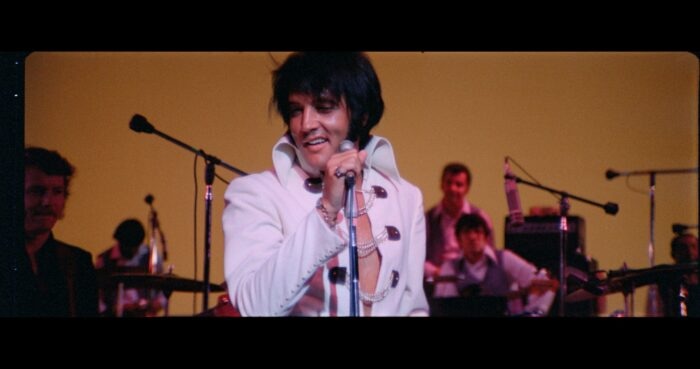
No party is complete without karaoke! Karaoke sessions will have the Midnight Sun Film Festival tent echoing and throbbing with good vibes. And nobody makes it throb like Elvis Presley. Epic: Elvis Presley in Concert (2025) is Baz Luhrmann’s spellbinding concert film, in which the King of Rock ’n’ Roll hypnotises audiences in both Las Vegas and the karaoke tent, also aided by his world-class charisma. Fortunately, Finland has a singer who does not lack charisma when standing alongside Elvis. Marjo Leinonen is undeniably one of the country’s finest rock vocalists – and now also one of its karaoke lead singers.
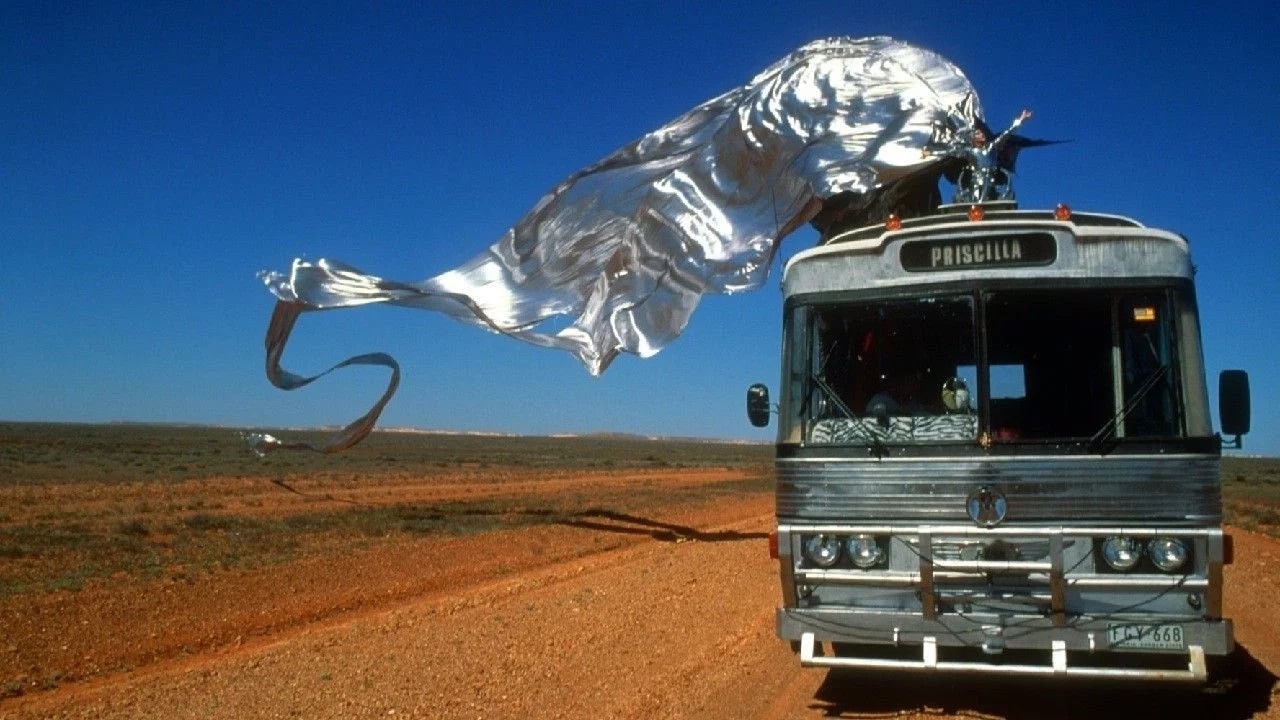
Saturday culminates in the festival’s second karaoke screening, the jubilant queer favourite The Adventures of Priscilla, Queen of the Desert (1994), which takes ABBA to the Australian outback. Stephan Elliott’s film also happens to be one of drag artist Pola Ivanka’s favourites. Having studied singing, Ivanka isn’t content merely to pucker her lips and imitate artists, as the film’s characters do. She leads the audience in song with all her might and her dazzling presence.
This year’s programme is exceptionally rich in the field of music. Among the documentaries are two Finnish icons: Tuomari Nurmio’s concert film 13 Kylmää laulua and the recently released Mikis and Me, which tells the story of Arja Saijonmaa. From around the world, we have a trio of aces: It’s Never Over, Jeff Buckley (2025), Boy George & Culture Club (2026) and Broken English (2025), which ranks among the all-time greatest music documentaries and features the final live performance by Marianne Faithfull, who passed away last year.
The Festival’s Masterclasses and guest sessions will feature international names whose expertise is as strong as their cinephilia, as well as top Finnish talents who delve into the secrets of experimental film and their own personal film histories.
Jon Wengström, Senior Curator at the Swedish Film Institute, is our neighbouring country’s leading expert on early cinema. In Sodankylä, Wengström will present a series of early 20th-century short films, both fiction and documentary, restored using various methods. For some of the films, only a single analogue copy exists, so the fragile history of cinema is very much present. Wengström, who is particularly well-versed in the work of silent film master Victor Sjöström, will also present Sjöström’s US hit He Who Gets Slapped (1924), which will be screened as part of the silent film series.
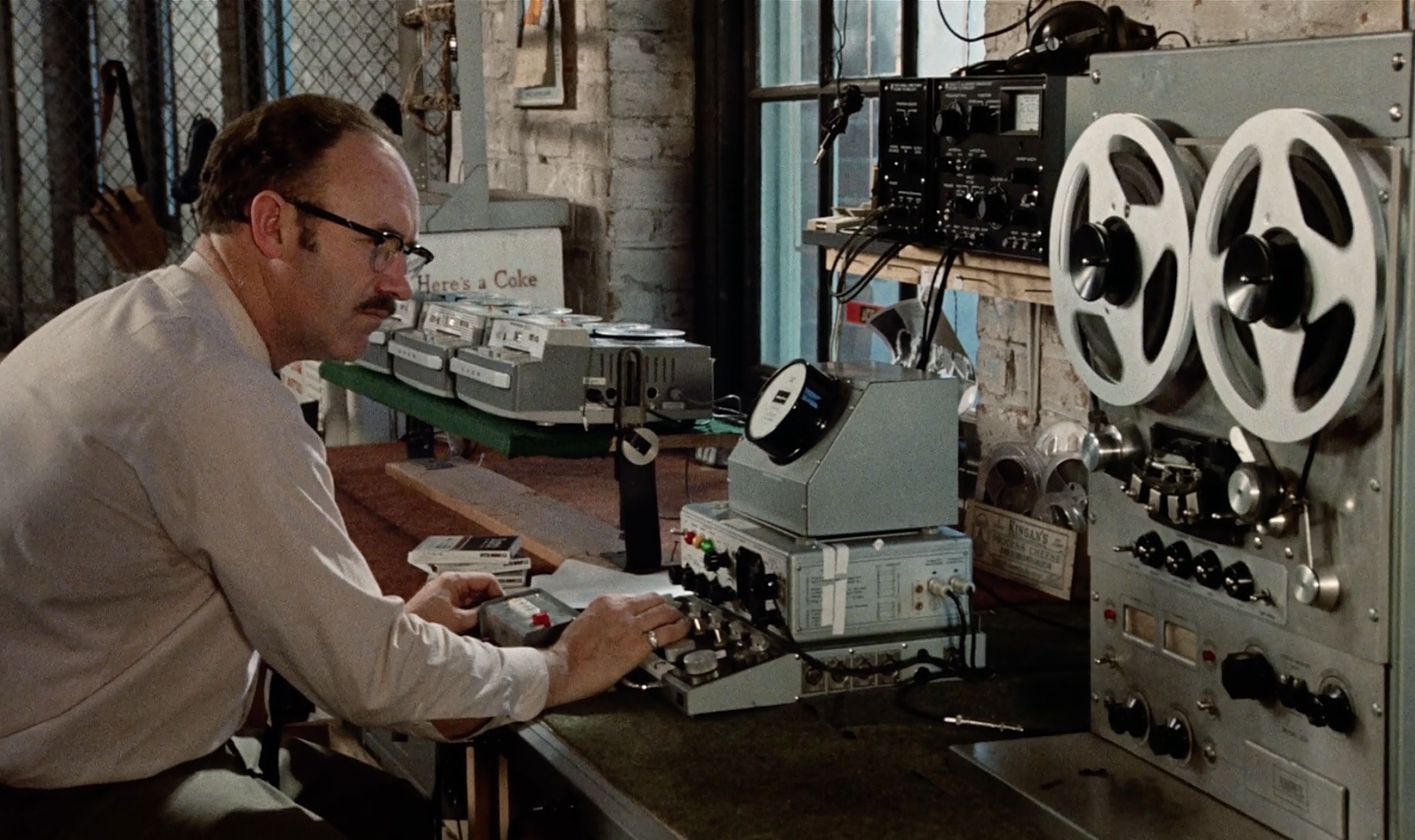
The Midnight Sun Film Festival. Carte Blanche guests have been given complete freedom to select their own favourites for the Festival. And who’d be better to interpret questions of freedom and power than Martti Koskenniemi, Professor Emeritus of International Law. The academician has selected two films for the programme: Francis Ford Coppola’s paranoid classic The Conversation (1974) and Terence Davies’s masterful family drama The Long Day Closes (1992) – both directors having visited Sodankylä.
German film expert Olaf Möller once again presents lesser-known gems of film history in his Masterclass. He will take us on a journey through European musicals of the 1960s, whilst reminding us of this joyful chapter in pop history. The best-known director in the series is probably the Italian Lina Wertmüller. The star of her film Don’t Sting the Mosquito (1967) is superstar Rita Pavone. More big names from the world of pop music feature in Michel Boisrond’s French film Find the Idol (1964), which includes performances by Charles Aznavour, Johnny Hallyday and Sylvie Vartan, amongst others.
American professor of film studies Jennifer Lynde Barker has curated a series of animated films around the themes of change and female directors. They connect otherwise diverse films from countries including Hungary, Estonia, and the United States, spanning from the 1950s to the present day. In Dóra Keresztes’s film One Two Three (2005), cats turn into men, whilst in Anu-Laura Tuttelberg’s work On the Other Side of the Woods (2014), the subject of transformation is the Little Red Riding Hood fairy tale. At its best – as is the case here – the transformation takes place before the viewers’ eyes but also within their minds.
Director and visual artist Mika Taanila’s Experimental Film Night School never ceases to propel the eyes into the silver screen dance and thoughts into a wild gallop. The collection of short films curated by Taanila includes, among others, the late visionary Ken Jacobs’ final work, The Whole Shebang (2019), which shatters the notion of coherent spaces and the two-dimensionality of film. Representing Finnish cinema and also the oldest work in the series is the early 8 mm film Minirusetti (1978) by the wild video artist Anneli Nygren, a dark parody of a children’s programme.
The Midnight Sun Film Festival does not overlook the foundations of film history. The 1950’s Early Works series, organised in collaboration with the Archive Film Festival Network, presents the early films of renowned masters that challenge the notion of a unified New Wave. The fiercely original works of Stanley Kubrick, Jacques Tati, Agnès Varda and Andrzej Wajda refuse to go with the flow.
The festival programme also features beloved films by French auteur Jean-Luc Godard, Polish maestro Krzysztof Kieślowski, and Japanese master Yasujirō Ozu. In addition to Ozu’s fiction films, Daniel Raim’s documentary The Ozu Diaries (2025) will be screened, portraying the philosopher-artist on the one hand and the alcohol-fuelled clown on the other – and revealing how his masterpieces came into being.
The Festival will be held from 10 to 14 June, from Wednesday morning to Sunday evening. The programme and guest filmmakers will be announced in May 2026. The programme guide will be published on Monday, 25 May, and ticket sales for the Festival will begin at the same time. Advance ticket sales will begin online on Wednesday, 27 May.
Midnight Sun Film Festival would like to thank its co-operation partners:
Sodankylä Municipality, Finnish Film Foundation, Trade Union Pro, Kemijoki Oy, Genelec, Finnish Cultural Foundation, Ministry of Education and Culture, Laitilan Wirvoitusjuomatehdas Oy, EU Media Creative, Tähtikuitu Oy, Jenny and Antti Wihuri Foundation, Goethe-Institut Finnland, Institut Français de Finlande, The Nordic Culture Fund, The Finnish Arts and Culture Agency (Kuvi), Finland Festivals Association and Yle.