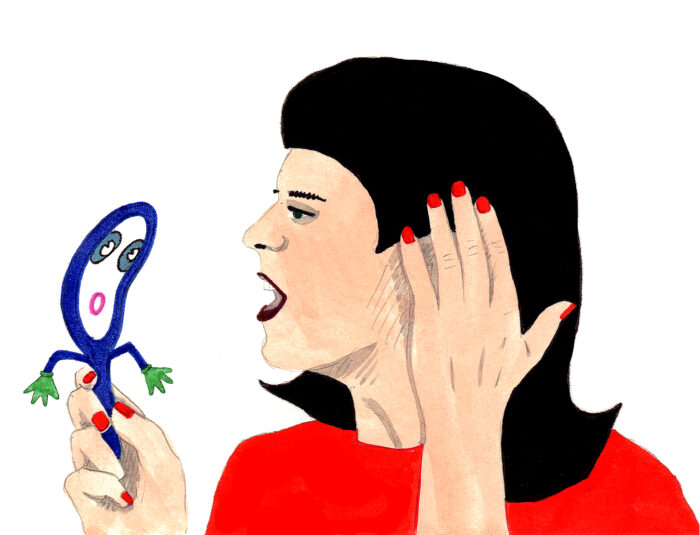
Transformation is central to animation. This is true of its storytelling, which can take a simple story, like a bear waking up from hibernation in the middle of winter, and turn it into a magical tale of existential dread, mysterious music, and the sweetness of friendship. Transformation is also a fundamental element of the animated form itself: the fluidity of the images mean that one thing can easily turn into another, like a cat into a man, or a human face into a globe. Indeed, metamorphosis is really the heart of animation. Shapes transform into meaningful objects, and then become abstract again, leading the mind to connect disparate or surprising thoughts, actions, matter, and images into a holistic unity. Such metamorphosis also represents the interconnections between humans, animals, and nature, and clarifies how much we influence and depend on each other. What better way to celebrate metamorphosis than with nine films by women from nine different countries. Each of these animators has contributed profoundly to the craft of animation with works that transform the way we look at the world.
Hungarian animator and artist Dóra Keresztes is especially attuned to metamorphosis as an essential state of being that reveals the deep connection between all things. One Two Three (2005) gives us a circular, global view as everything under the sun is ceaselessly intertwined. Ukrainian director Valentyna Kostyleva brings objects to life with her stop-motion work, including Thread and the Kitten (1974), a musical about a girl made of sky-blue thread who transforms balls of yarn into sea, sun, and forest, while also teaching a kitten how to be chill. The inspiring Canadian Evelyn Lambart brings her uniquely beautiful cutout animation to The Hoarder (1969), a cautionary tale in which the world is transformed by power and greed, then wisdom and courage. Sweet Night (2019), a luminous tale by Belgian Lia Bertels, relates how insomnia can reveal a world transformed by starlight, secret longings, sorrow, and unexpected revelations.
The “meta” part of metamorphosis is most clearly evident in Joanna Priestley’s Voices (1985), an American film offering meta-commentary about how and why transformation is so essential to animation, and how it can change the way we think about the world. The following films illustrate further approaches to how animation transforms perspective. Thumbelina (1954), directed by pioneering German animator Lotte Reiniger, crafts a magical reality out of paper cutouts in a fairy tale about a tiny girl’s journey through hidden spaces. Estonian Anu-Laura Tuttelberg’s On the Other Side of the Woods (2014) offers an intriguing revision of Little Red Riding Hood that also focuses on the way stop-motion animation creates enchantment. Czech animation legend Hermína Týrlová’s Snowman (1966) creates a world whose charming fuzzy visuals and avant-garde music transform winter into whimsy. Contemporary Polish animator Renata Gaşiorowska goes even more abstract with her music video With Your Eyes Closed (2015), while reminding us that cuteness helps make the world go round.
Jennifer Lynde Barker
Screening duration: 90 min
Curated by: Jennifer Lynde Barker
FILMS
One Two Three (Dir: Dóra Keresztes, Hungary, 2005)
Thread and the Kitten (Dir: Valentina Kostyleva, Soviet Union, 1974)
The Hoarder (Dir: Evelyn Lambart, Canada, 1969)
Sweet Night (Dir: Lia Bertels, Belgium, 2019)
Voices (Dir: Joanna Priestley, USA, 1985)
Thumbelina (Dir: Lotte Reiniger, United Kingdom, 1954)
On the Other Side of the Woods (Dir: Anu-Laura Tuttelberg, Estonia, 2014)
Snowman (Dir: Hermína Týrlová, Czechoslovakia, 1966)
With Your Eyes Closed (Dir: Renata Gaşiorowska, Poland, 2015)