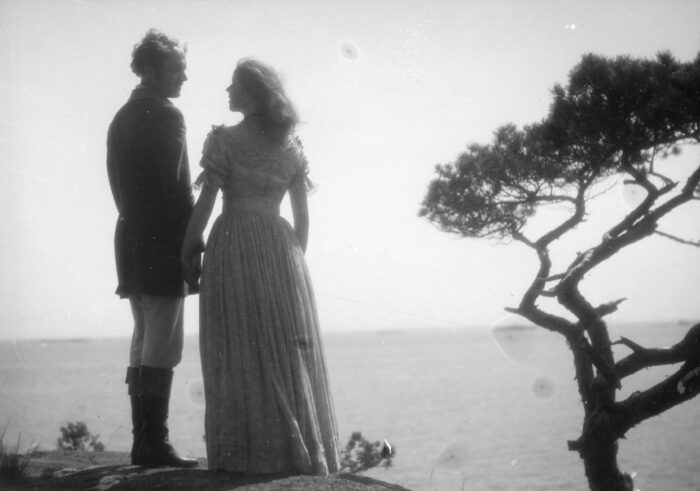
There have traditionally been many melodramatists in Finnish cinema, but even amongst them Toivo Särkkä, the producer mogul at Suomen Filmiteollisuus, was in his own noble league. In his directorial work Särkkä was always at his strongest when depicting the past; especially the epoch of the imperial Russian period represented a reality over the present for him. Time after time Särkkä found the most genuine pulse of the 1800s’ ghost Europe in the remote North, whether the focus was on artists (J. L. Runeberg and Fredrik Pacius), religious revivalist movements or bourgeois mansion life with Swedish-Russian notes.
This meant that Särkkä was perfectly suited for the job when he chose the same Guy de Maupassant’s novel from 1883, from which this year’s guest Stéphane Brizé also made his version. The Northern adaptation of the world literature classic is perfected by the top tier of the studio era: forever tormented Rauli Tuomi, Edvin Laine, who this time embodies a tragicomic, slavic clamour mentality, and – above all – Eeva-Kaarina Volanen, whose delicate and sweet essence carries the hope of a better tomorrow, even when crushed: ”The whole world cannot rest solely on lies, unrestrained desire, and blind trust.”
Petteri Kalliomäki