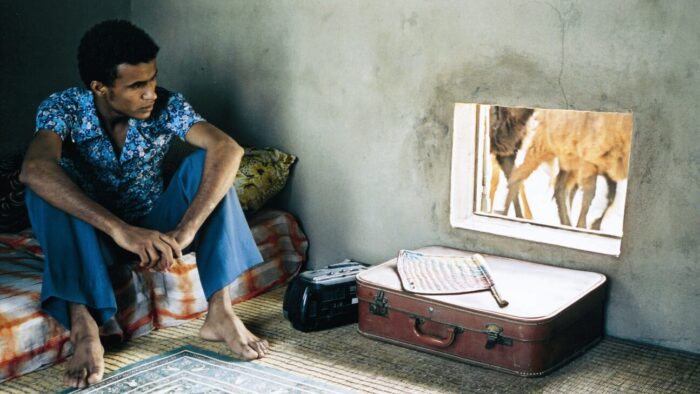
Aberrahmane Sissako’s breakthrough film derives its original, metaphorical title from the fishing town of Nouadhibou and its temporary dwellings called heremakono, meaning “waiting for happiness.” The film’s central setting, Mauritania’s second largest city, is a liminal place of estrangement for many on their journey toward emigration to Europe.
Waiting for Happiness examines a particular sense of alienation and otherness amid expectations and between cultures. The protagonist Abdallah – possibly a self-portrait of Sissako – has come to visit his mother once more before returning to his studies in Europe. Abdallah asks the young orphan boy named Khatra, the film’s embodiment of hope, to teach him the local language. The young boy is practically condemned to remain in the city for the rest of his life – as is Maata, the mysterious and wise electrician of the “old school” who has adopted him.
Poeticized through luminous images of the ocean and sandy shores, the film makes beautiful observations about questions of rootlessness and globalization in West African reality. The quiet and serenely sensual narration masterfully succeeds in breaking our hearts as it follows characters one would not wish to see lose their souls under the colonizing dangers of Europeanization.
Timo Malmi